About Us
Focus Areas
Programmes
Knowledge Hub
News & Media
Overview

Leaders in Teaching
Sierra Leone

Leaders in Teaching (LiT) Sierra Leone is a Government of Sierra Leone programme implemented and led by the MBSSE and MTHE, in partnership with Lɛ Wi Lan and the Mastercard Foundation.

The goal of LiT Sierra Leone is to transform the country's secondary education system so that Sierra Leonean secondary education graduates are equipped with the knowledge, skills, values and attitude required to progress to further studies, to secure dignified and fulfilling work, and to contribute to nation building.
Strategy

Young Africa Works Alignment

The approach is closely aligned to Mastercard Foundation's Young Africa Works strategy, which aims to enable 30 million young Africans to secure dignified work by 2030. LiT Sierra Leone contributes to this by:

  • Transforming secondary education for 2,350,000 students (1,210,000 young women).
  • Strengthening skills of 30,000 teachers, 2,100 school leaders and 300 lecturers.
  • Revitalising TVET by supporting 10 Technical & Vocational Schools.
  • Ensuring 1,000,000 young people graduate with the skills required to succeed.
Implementation

The Four Pillars of LiT Sierra Leone

This goal of transformation is delivered through four integrated pillars of reform.

LEAD
LEAD
Pillar 01 — LEAD

Building strong, inclusive school leadership and governance systems

Effective schools depend on strong leadership. Under the LEAD pillar, LiT Sierra Leone strengthens the leadership and management of Junior Secondary Schools, Senior Secondary Schools and Technical and Vocational Secondary Schools, so that principals and School Boards oversee safe, learning-focused institutions capable of continuous improvement.

LiT Sierra Leone brings together the Ministry of Basic and Senior Secondary Education, the Ministry of Technical and Higher Education, the Teaching Service Commission, the West African Examinations Council, the Tertiary Education Commission and the National Council for Technical and Vocational Education around a single, harmonised national Roadmap for secondary education and teacher education reform.

Through the School Leadership Programme, 2,100 school leaders receive accredited, year-long training, equipping them with a recognised professional credential and the skills to run safe, learning-focused institutions. All 3,371 Junior Secondary Schools, Senior Secondary Schools and Technical and Vocational Secondary Schools develop and implement learning-focused School Improvement Plans.

TRAIN
TRAIN
Pillar 02 — TRAIN

Improving the quality and relevance of pre-service and in-service teacher education

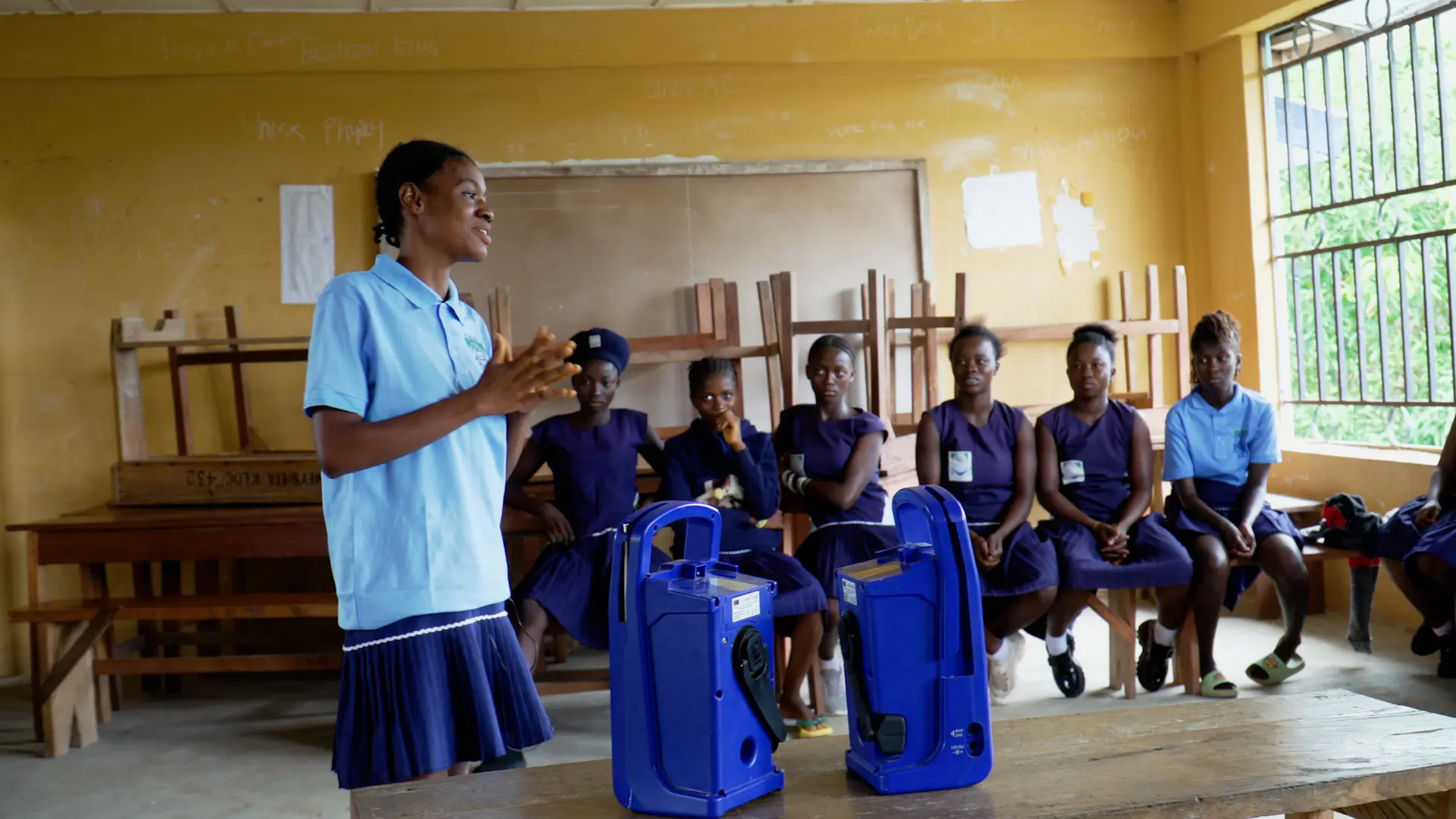
A new curriculum can only transform learning if teachers are equipped to deliver it. Under the TRAIN pillar, LiT Sierra Leone ensures that teachers and graduates from Teacher Training Institutions are delivering the new secondary curriculum and assessment system in line with Sierra Leone's Professional Standards for Teachers.

Sierra Leonean teachers and subject experts develop teacher manuals, textbooks and Community of Practice Handbooks for the core Junior and Senior Secondary subjects, ensuring that materials are written by, and owned by, the profession itself. Approximately 30,000 in-service teachers build familiarity with these materials through peer-led, weekly, school-based Community of Practice sessions.

Ten Technical and Vocational Secondary Schools are supported to deliver competency-based training aligned to industry standards, with structured employer linkages, re-establishing technical and vocational education as a credible pathway to dignified and fulfilling work.

RECRUIT
RECRUIT
Pillar 03 — RECRUIT

Attracting and retaining quality teachers through an equitable, cost-effective and data-driven system

Sierra Leone's secondary schools need enough qualified teachers, fairly deployed, to succeed. Under the RECRUIT pillar, LiT Sierra Leone works with the Teaching Service Commission to build a comprehensive, evidence-based recruitment and deployment system that matches qualified teachers to the schools that need them most.

A strengthened Teacher Management Information System becomes the Teaching Service Commission's central platform for teacher registration, licensing, deployment and management, resolving long-standing gaps between teacher records and payroll data.

Targeted pilots test what actually works to retain teachers in the postings that need them most, including bonded scholarships for female teachers taking up rural postings, and financial-empowerment models such as Village Savings and Loan Associations.

MOTIVATE
MOTIVATE
Pillar 04 — MOTIVATE

Enhancing teacher motivation and elevating the status of the profession

Recruiting and training teachers is only part of the answer; Sierra Leone also needs a teaching profession that people want to join and remain in. Under the MOTIVATE pillar, LiT Sierra Leone works with the Teaching Service Commission to build evidence-based career pathways, recognition systems and resolution mechanisms.

A Teacher Motivation and Retention Framework guides the design of career pathways and incentives suited to Sierra Leone's specific public financial management realities, with continuing professional development positioned as a genuine lever for career progression.

A strengthened recognition system elevates teaching as a respected vocation at national, community and peer level, including a formal teacher awards programme that publicly celebrates excellence and commitment to hard-to-reach postings.

Context

Why is LiT needed now?

Lɛ Wi Lan builds on a decade of trusted partnership with government through the FCDO-funded Leh Wi Lan Project, which laid the foundations for transformative change including the establishment of a School Leadership Programme and the MBSSE Knowledge Platform.

LiT Sierra Leone ensures that the new secondary education curriculum is understood and taught effectively across all schools, ensuring that young people have the skills, values and attitude required to succeed in the world of work.

Working on education in Sierra Leone? Let's talk.

Ministries, funders, researchers and school leaders - we're open to partnership at every level of the system.